
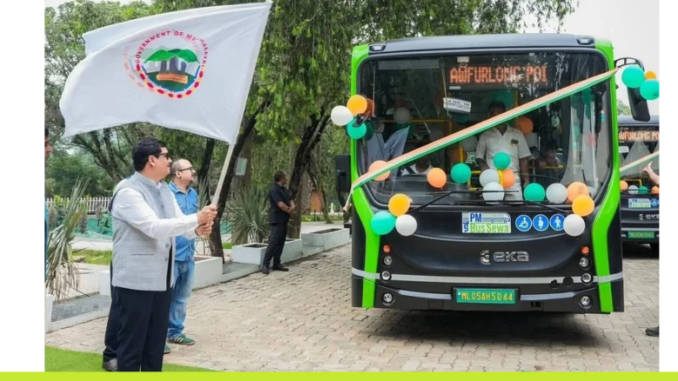
India’s public transport electrification journey is expanding beyond major metropolitan cities. Meghalaya has officially launched its first fleet of electric buses under the PM eBus Sewa Scheme, signalling a growing commitment towards cleaner, more sustainable mobility solutions.
The first five electric buses were flagged off in Shillong and form part of a larger sanctioned fleet of 50 electric buses planned for the state.
Meghalaya Begins Its E-Bus Journey
The newly introduced electric buses are designed to improve both sustainability and passenger experience.
Key features include:
- Claimed range of 180–200 km per charge
- Capacity for 25 passengers plus a driver
- GPS-based tracking systems
- Electronic ticketing solutions
- Wheelchair accessibility
- Foldable ramps for inclusive mobility
The buses will initially operate across four identified routes in Shillong.
A Modern Model For Public Transport
The services will run under a Gross Cost Contract (GCC) model, where operators are compensated based on service performance rather than passenger fare collection.
This model offers several advantages:
- Improved service reliability
- Better operational accountability
- Reduced financial risk for operators
- Stronger focus on passenger experience
As more states adopt GCC-based operations, the model is emerging as a preferred framework for public transport electrification.
The Bigger Mobility Opportunity
Shillong aims to operate a combined fleet of nearly 150 diesel and electric buses within the next six months, targeting daily ridership of approximately 60,000 passengers.
This development highlights a broader trend:
- E-bus adoption expanding beyond metro cities
- Greater investment in sustainable public transport
- Improved accessibility through modern vehicle design
- Reduced dependence on conventional fuel-powered buses
Looking Ahead
Meghalaya’s e-bus rollout demonstrates how smaller states are becoming active participants in India’s clean mobility transition. As public transport electrification gains momentum across the country, regional markets could emerge as the next major growth engine for the e-bus industry.