
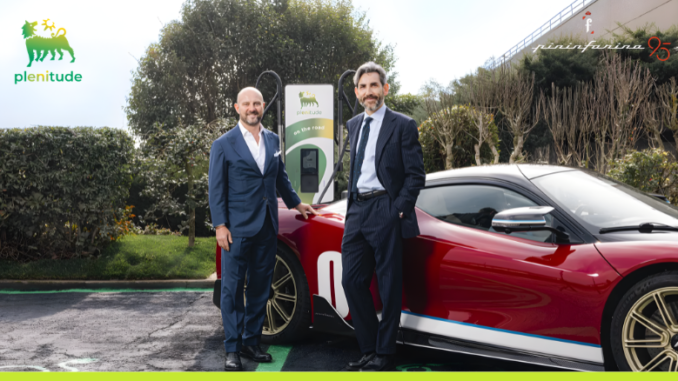
Plenitude has announced a strategic collaboration with renowned Italian design firm Pininfarina to redesign its EV charging stations. The partnership aims to transform public EV infrastructure by integrating advanced functionality with high-end design aesthetics, reinforcing the role of charging stations as visible pillars of sustainable mobility.
As electric vehicle adoption expands across Europe, charging networks are increasingly seen as critical components of urban infrastructure rather than standalone utility assets.
Design-Driven Charging Infrastructure for Modern Cities
Under this collaboration, Pininfarina will contribute its expertise in industrial and automotive design to reimagine the look and feel of Plenitude’s charging stations. The redesigned infrastructure will feature a contemporary visual identity, modular construction, and improved integration into urban environments.
The initiative focuses on enhancing user interaction, accessibility, and overall experience while maintaining operational efficiency. By blending form and function, the project aims to create charging points that align with smart city concepts and evolving consumer expectations around sustainability and design quality.
The move also signals a shift toward positioning charging stations as architectural and branding elements within public spaces, rather than purely technical installations.
Strategic Positioning in a Competitive EV Charging Market
The EV charging sector is becoming increasingly competitive as utilities, oil majors, and private operators expand their networks. Differentiation through reliability, speed, and digital services remains essential but design and user experience are emerging as additional competitive levers.
By collaborating with Pininfarina, Plenitude strengthens its brand presence and underscores its commitment to innovation and sustainability. The redesigned charging stations are expected to enhance visibility, improve customer engagement, and support long-term infrastructure growth aligned with Europe’s energy transition goals.
This partnership reflects the broader evolution of EV infrastructure from basic charging points to integrated, design-forward mobility hubs that support the electrified future of transportation.