

Major Tender Issued for Grid-Scale Energy Storage
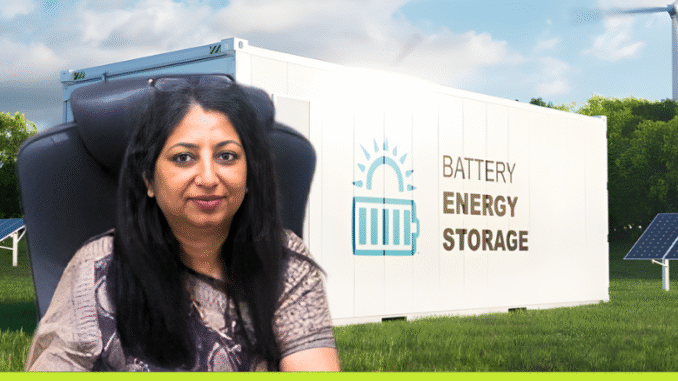
NTPC Ltd’s subsidiary NVVN has released a Request for Selection (RfS) inviting developers to build a 125 MW / 500 MWh standalone battery energy storage system (BESS) in Chhattisgarh. The project is to be located near the 220 kV Khedamara Substation in Durg district. The BESS will be procured under a Build-Own-Operate (BOO) model, with support from viability gap funding (VGF) to make the project financially viable.
The bidding window closes on December 30, 2025, and selection is expected after an e-reverse auction. Qualified bidders must demonstrate strong technical and financial credentials, including net worth and turnover thresholds.
Performance & Operational Requirements for BESS Developers
Under the tender terms, the selected BESS developer (BESSD) must ensure a round-trip efficiency (RtE) of at least 85%, and guarantee availability of 95% every month. The system must support a daily charge–discharge cycle — roughly 420 cycles per year with occasional double-cycle usage allowed up to five days a month. The dispatchable capacity must not degrade below 70% over the 16-year contract period, or liquidated damages will apply.
The project design includes land allotment (≈ 10 acres) on a right-to-use basis and interconnection to the State Transmission Utility (STU) network. BESSD will handle design, equipment supply, installation, and O&M, while the state utility will handle charging supply and scheduling.
Significance for Renewable Integration and Grid Stability
This tender underscores India’s accelerating transition toward large-scale energy storage, necessary to integrate renewable generation reliably and address peak demand fluctuations. For Chhattisgarh, with growing load and variable renewable capacity, a 500 MWh BESS can provide crucial grid balancing, peak-shaving, and improve power supply stability for distribution utilities.
Successful execution could provide a template for further standalone BESS projects, enhancing confidence in storage-backed grids, enabling smoother renewable absorption, and potentially supporting future EV charging load with dispatchable clean energy.