
India’s EV charging ecosystem is rapidly expanding. However, the next challenge is making charging more accessible, convenient, and seamless for EV users.
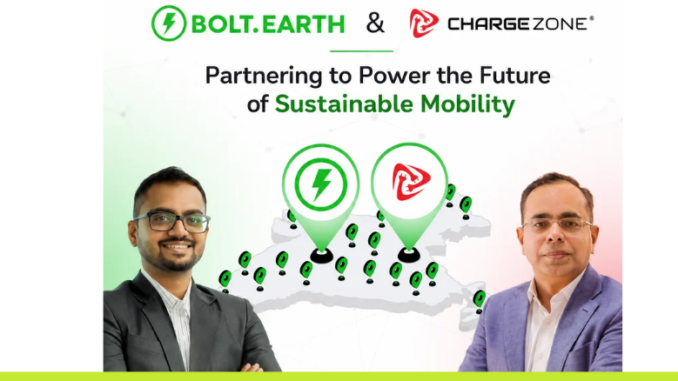
In a significant move, Bolt.Earth and ChargeZone have announced a strategic partnership to integrate their charging networks, enabling users to locate, access, and pay for chargers from both platforms through a single application.
The collaboration represents an important step towards building a more connected EV charging ecosystem in India.
Solving A Key EV Charging Challenge
One of the biggest challenges facing EV users today is network fragmentation.
Under the partnership:
- Users gain access to more than 1,500 fast-charging locations
- Charger discovery becomes easier through a single platform
- Integrated payments improve convenience
- Real-time charger availability enhances the user experience
The goal is to reduce friction and simplify the charging journey for electric vehicle owners.
Why Interoperability Is Becoming Critical
As charging infrastructure scales, user convenience is becoming increasingly important.
The partnership highlights the growing need for:
- Charging interoperability
- Unified digital experiences
- Better charger accessibility
- Reduced range anxiety
Industry leaders are increasingly recognising that a seamless charging experience can accelerate EV adoption as effectively as adding new charging stations.
A New Phase For EV Infrastructure
The significance of this development extends beyond charger access.
It signals:
- Greater collaboration across charging networks
- Maturing EV infrastructure ecosystems
- Increased focus on customer experience
- Stronger digital integration within charging platforms
The future of charging will depend not only on infrastructure growth but also on how efficiently networks work together.
Looking Ahead
As EV adoption continues to grow, interoperability could become a defining feature of India’s charging ecosystem. The Bolt.Earth-ChargeZone partnership demonstrates how unified charging networks can improve convenience, strengthen user confidence, and support the next phase of electric mobility growth.