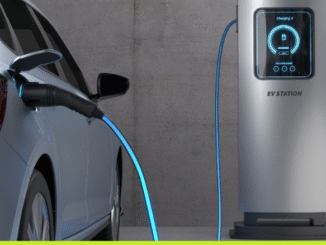

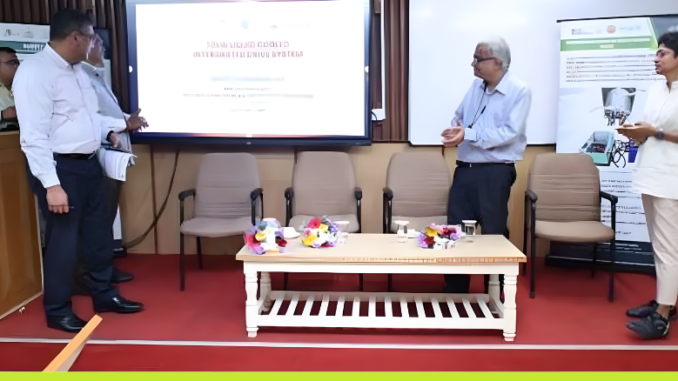

The Government of India has launched an indigenous 30 kW Wide Band Gap (WBG) Integrated Drive System (IDS) to strengthen local EV power electronics capabilities and reduce the nation’s dependence on imported EV components. The system was officially unveiled at the Indian Institute of Technology Madras, developed through collaboration between the Ministry of Electronics and Information Technology (MeitY), C-DAC Thiruvananthapuram, IIT Madras, and Lucas TVS.
This initiative forms part of a broader national strategy to promote self-reliance in advanced EV technologies and support India’s growing electric vehicle ecosystem by lowering costs and accelerating EV adoption.
What the 30 kW WBG Integrated Drive System Is
The newly developed Integrated Drive System uses Wide Band Gap semiconductor technology to combine the motor and inverter functions into a single compact, high-power-density unit. This replaces conventional separate motor and inverter configurations, improving efficiency and reducing weight.
SAFE RTOS ExportersIntegration of the WBG-based IDS targets the 30 kW power class, which is relevant for mainstream compact EVs and fleet mobility platforms in India. The system has been successfully designed, fabricated, and validated, and is now ready for commercial production and deployment, offering a path to reduce imported powertrain systems and semiconductors.
Strategic Value and Market Impact
By enabling local production of advanced drive systems, the Indian government aims to strengthen the domestic EV supply chain and build robust manufacturing capabilities. This has potential positive ripple effects on MSMEs involved in power electronics, control hardware, and thermal systems.
The indigenous IDS initiative aligns with national goals such as Production-Linked Incentive (PLI) schemes and the National Mission on Power Electronics Technology (NaMPET). It reflects a growing emphasis on building domestic technology leadership, creating intellectual property, and supporting large-scale EV deployment across passenger and commercial segments.
The move also reinforces policy focus on boosting EV affordability by replacing costly imported components with locally developed alternatives, accelerating adoption and local industry growth.