

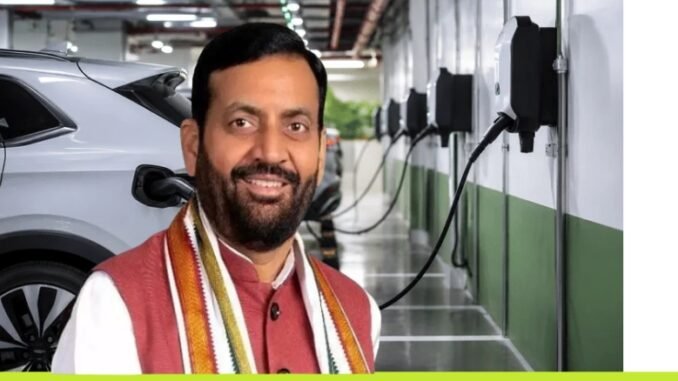
Haryana Makes EV Readiness Mandatory
Haryana has amended the Haryana Building Code 2017 to make electric vehicle charging infrastructure mandatory across new and renovated residential and commercial developments.
The move is aimed at solving one of the biggest barriers to EV adoption: reliable access to charging infrastructure.
New Charging Norms For Buildings
Under the revised rules, commercial and non-residential buildings such as malls, hotels, shopping complexes, and office spaces with parking for at least 10 cars must provide one EV charging point for every three parking slots.
Residential projects, including group housing societies and cooperative housing developments, must provide one EV charging point for every five parking slots.
Key Requirements
- One EV charger for every three commercial parking slots
- One EV charger for every five residential parking slots
- 100% EV-ready electrical conduits across projects
- Charging allowed in basement and stilt parking areas
- EV charging provisions to be disclosed during Occupation Certificate applications
Why This Policy Matters
A major highlight of the amendment is the requirement for developments to be 100% EV-ready. This means future charging infrastructure can be added without expensive retrofitting.
The government has also exempted EV charging infrastructure from Floor Area Ratio (FAR) calculations, making it easier for developers to include charging facilities without affecting project economics.
Expected Industry Impact
The policy is expected to benefit multiple stakeholders across the EV ecosystem, including:
- Charging infrastructure providers
- Real estate developers
- Power utilities
- EV owners
- Residential societies and commercial property operators
A Blueprint For Other States
Haryana’s building-code amendment signals an infrastructure-first approach to electric mobility. Instead of waiting for EV demand to rise, the state is preparing its buildings and urban spaces in advance.
As EV adoption accelerates across India, similar building-code reforms could become an important tool for states looking to future-proof urban infrastructure and support clean mobility growth.