
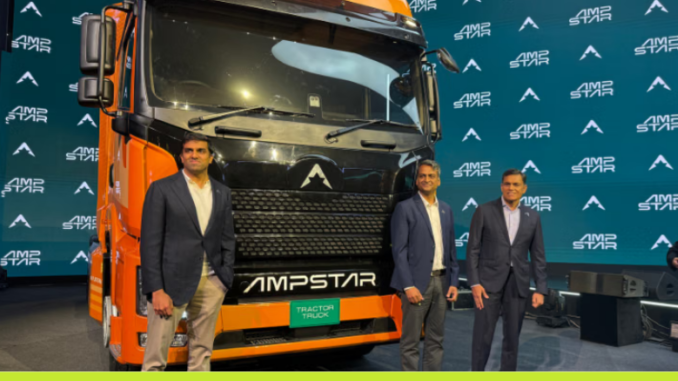
JSW Greentech has entered India’s electric commercial vehicle market with the launch of Ampstar, a new brand covering electric trucks and buses. The company unveiled a 55-tonne electric tractor-trailer and an electric bus in Mumbai, with commercial production planned at its upcoming facility in Chhatrapati Sambhajinagar, Maharashtra.
₹2,500 Crore Investment for Electric CVs
JSW Group plans to invest around ₹2,500 crore in the first phase of its electric commercial vehicle business.
The 90-acre manufacturing facility will have an annual capacity of 15,000 vehicles, comprising:
- 10,000 electric buses
- 5,000 electric trucks
- Battery-pack assembly facilities
- Truck-cabin manufacturing and electric-bus body building
The plant is also set to feature a pre-treatment and electro-deposition system aimed at improving corrosion protection and vehicle durability.
55-Tonne Electric Trucks Lead the Charge
Ampstar will initially focus on 55-tonne electric tractor-trailers for industrial applications including steel, cement, mining and ports.
The company plans to subsequently introduce:
- Electric tippers
- Fixed-body trucks
- Dumpers
- Other commercial vehicle categories
Trucks will be offered with fixed and swappable battery systems, with configurations customised according to customer requirements.
Electric Buses From 7 to 18 Metres
Ampstar’s electric bus portfolio will cover vehicles from 7 to 18 metres. Applications will include staff transportation, city operations, school transport and airport-tarmac services.
Focus on Captive Fleet Operations
JSW Greentech will initially target closed-loop operations, allowing charging or battery-swapping infrastructure to be installed along predictable routes. JSW’s steel, cement and port businesses already operate around 17,000 trucks, creating a potential captive ecosystem for deployment.
B2B Sales and Mobility-as-a-Service
Ampstar will initially adopt a direct B2B sales strategy, offering outright purchase, cost-per-kilometre and wet-lease models. Its broader package will include financing, charging infrastructure, maintenance and battery-as-a-service (BaaS).