

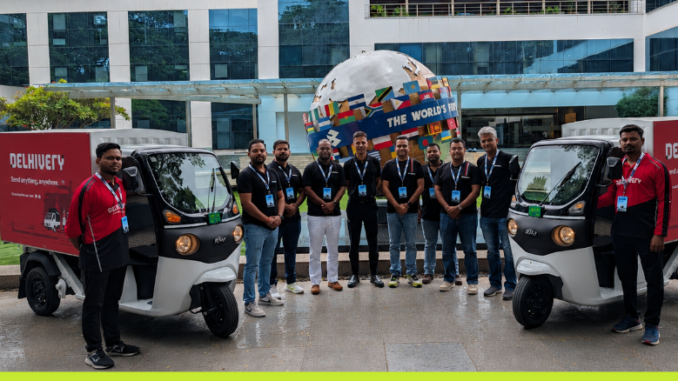
India’s logistics sector is steadily accelerating its transition towards electric mobility, with major fleet operators increasingly adopting EVs for last-mile delivery operations. Delhivery has partnered with Bajaj Auto to deploy 200 Bajaj RIKI C4005 (eCart) electric cargo three-wheelers across its delivery network, including operations in Tier-2 and Tier-3 cities.
The deployment marks the first phase of a larger electrification initiative and reflects growing confidence in the economics of electric cargo vehicles.
First Phase Of A Larger EV Rollout
The partnership begins with the deployment of 200 electric cargo three-wheelers across Delhivery’s logistics operations.
Key highlights include:
• 200 Bajaj RIKI C4005 (eCart) vehicles deployed
• Integration into Delhivery’s last-mile delivery network
• Presence across Tier-2 and Tier-3 cities
• Focus on sustainable logistics operations
• Collaboration between Delhivery and Bajaj Auto
The rollout is expected to support cleaner and more efficient delivery operations across multiple markets.
Ambitious Expansion Plans Ahead
The partnership is designed to scale significantly over the coming years.
Future plans include:
• Phase 2 rollout targeted for 2026–27
• Around 1,500 electric three-wheelers planned
• Deployment across both L3 and L5 categories
• Expansion of EV adoption within logistics fleets
The planned scale-up highlights the growing role of EVs in commercial transportation and delivery networks.
Built For Last-Mile Logistics
The Bajaj RIKI C4005 (eCart) has been developed specifically for cargo transportation requirements.
Vehicle features include:
• Electric powertrain
• Two-speed automatic transmission
• Claimed range of over 100 km per charge
• Designed for commercial cargo applications
These characteristics make it suitable for urban and regional delivery operations where efficiency and operating costs are critical.
Why This Matters For India’s EV Ecosystem
Commercial logistics is emerging as one of the strongest use cases for electrification. Delhivery’s deployment demonstrates how EV adoption is moving beyond pilot programmes and entering large-scale commercial operations. The expansion into Tier-2 and Tier-3 cities also signals that logistics electrification is becoming a nationwide opportunity rather than a metro-focused trend.